Key takeaways
- The soil under the driveway is the first layer, and it must be firm.
- A compacted crushed stone base spreads weight and drains water.
- Hot mix asphalt is placed in one or two layers and rolled tight.
- Slope and edges decide how water leaves the driveway.
The ground underneath
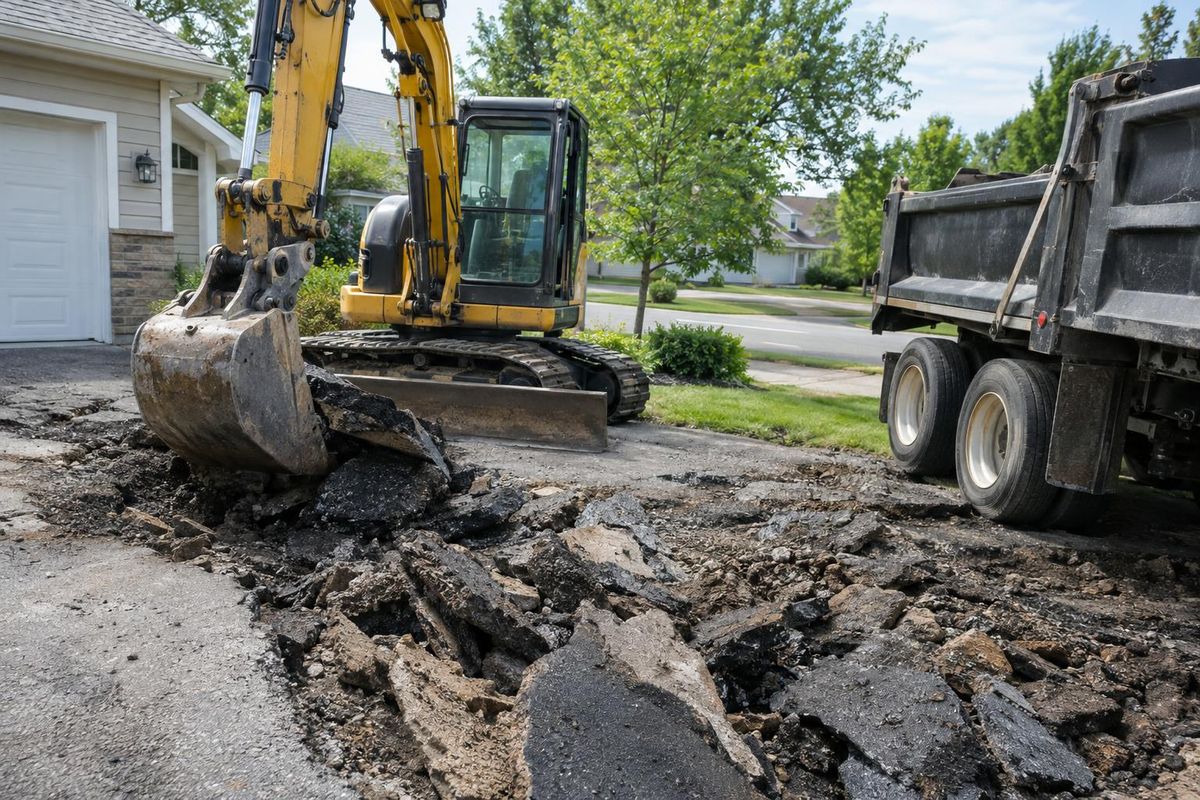
Everything starts with the soil. Topsoil, roots and soft clay have to be removed or improved, because they compress and move. If the ground under a driveway shifts, the pavement above will crack and dip no matter how good the asphalt is.
A stable subgrade also needs a shape. We set a slight crown or one-way slope so water runs off the surface instead of sitting on it.
The stone base
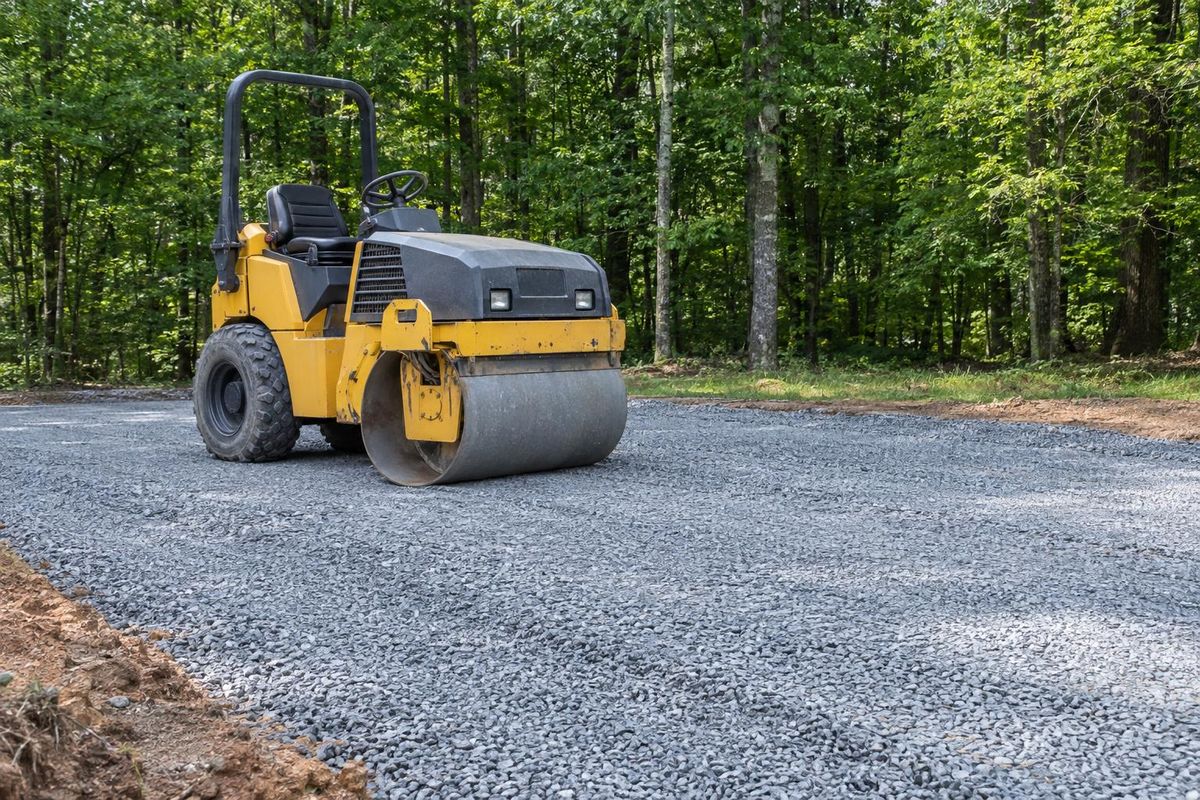
Crushed stone is placed in layers called lifts and compacted with a plate compactor or roller. The base spreads vehicle weight across the soil, and it allows water to drain through instead of collecting under the pavement.
Stone depth depends on soil and use. A residential driveway on firm soil needs less than a heavy-use farm lane on soft clay.
The asphalt layers
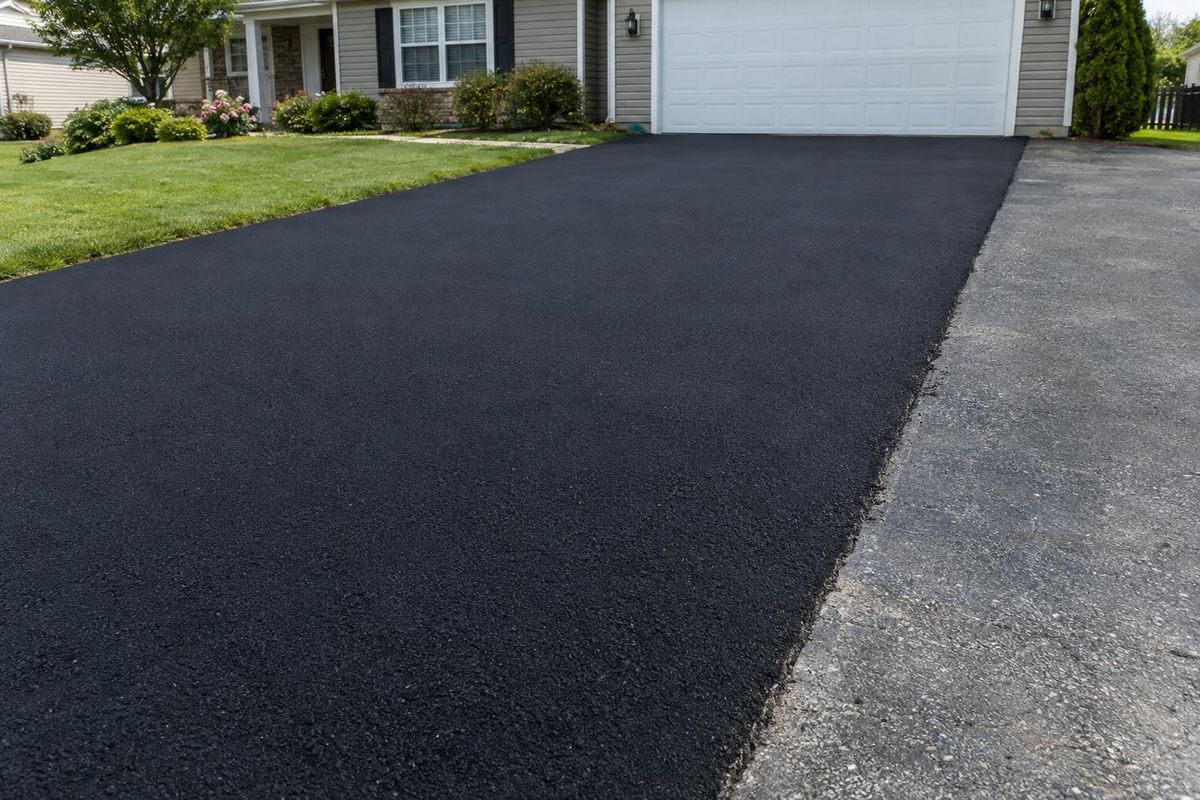
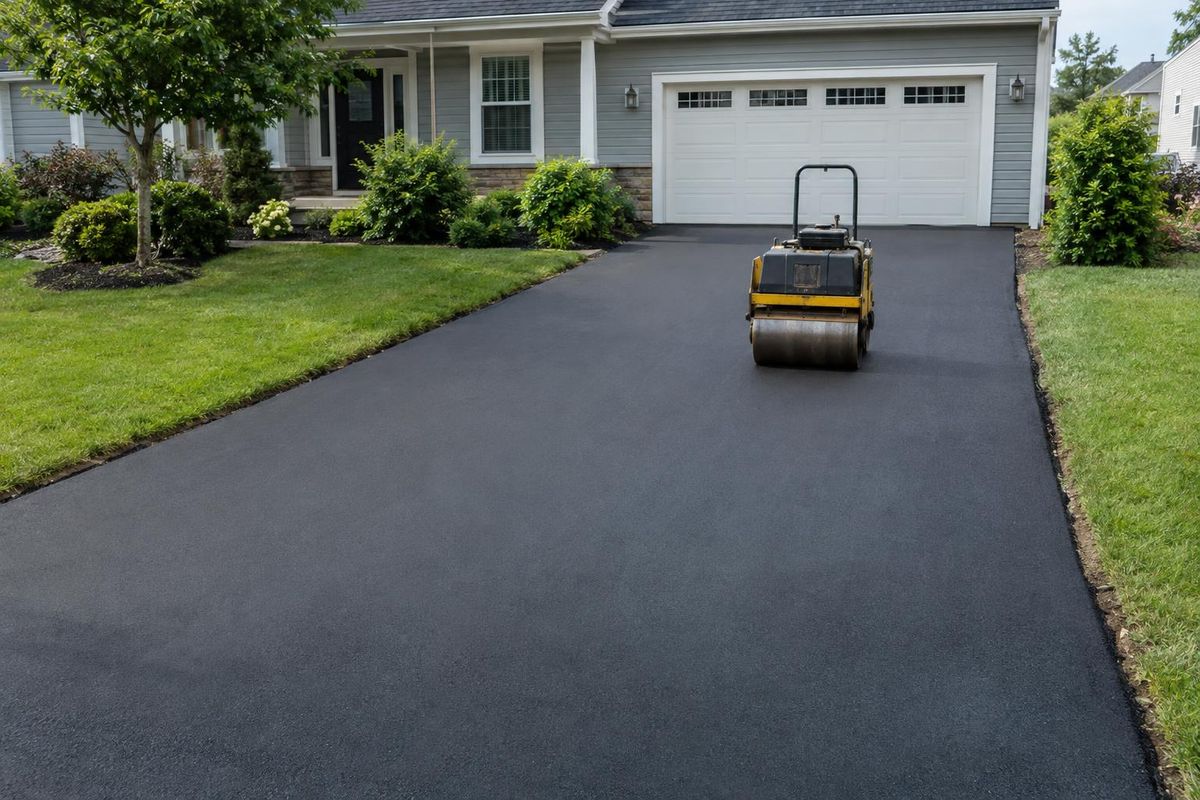
Hot mix asphalt is delivered hot, spread with a paver or by hand in tight spaces and rolled to compact it. Many driveways use a single layer of surface mix. Thicker builds may use a binder layer under a finer surface layer.
Temperature and timing matter. Asphalt has to be rolled while it is still hot enough to compact fully.
Edges and finishing
Edges are shaped and compacted so the pavement does not crumble at the sides. Transitions at the garage, street and walkways are set so water drains away from the house and the surface rides smoothly.
Once the asphalt cools, the driveway is ready for light traffic. It continues to harden over the following weeks and months.
Quick answers
Why does the base matter so much?
The base carries the load and drains water. A weak or wet base is the most common reason driveways fail early.
Is one layer of asphalt enough for a driveway?
For many residential driveways, yes, if the base is solid and the thickness is right. Heavier use may call for two layers.
How long until the driveway fully hardens?
It is usable in a day or two, but asphalt keeps curing for weeks, so avoid sharp turning in place and heavy point loads in hot weather.