Key takeaways
- Small cracks are an invitation to water; seal them early.
- Alligator cracking signals base failure and needs deeper repair.
- Edge cracks usually mean lack of support or drainage trouble.
- Noting where and when cracks appear helps find the cause.
Hairline and small cracks
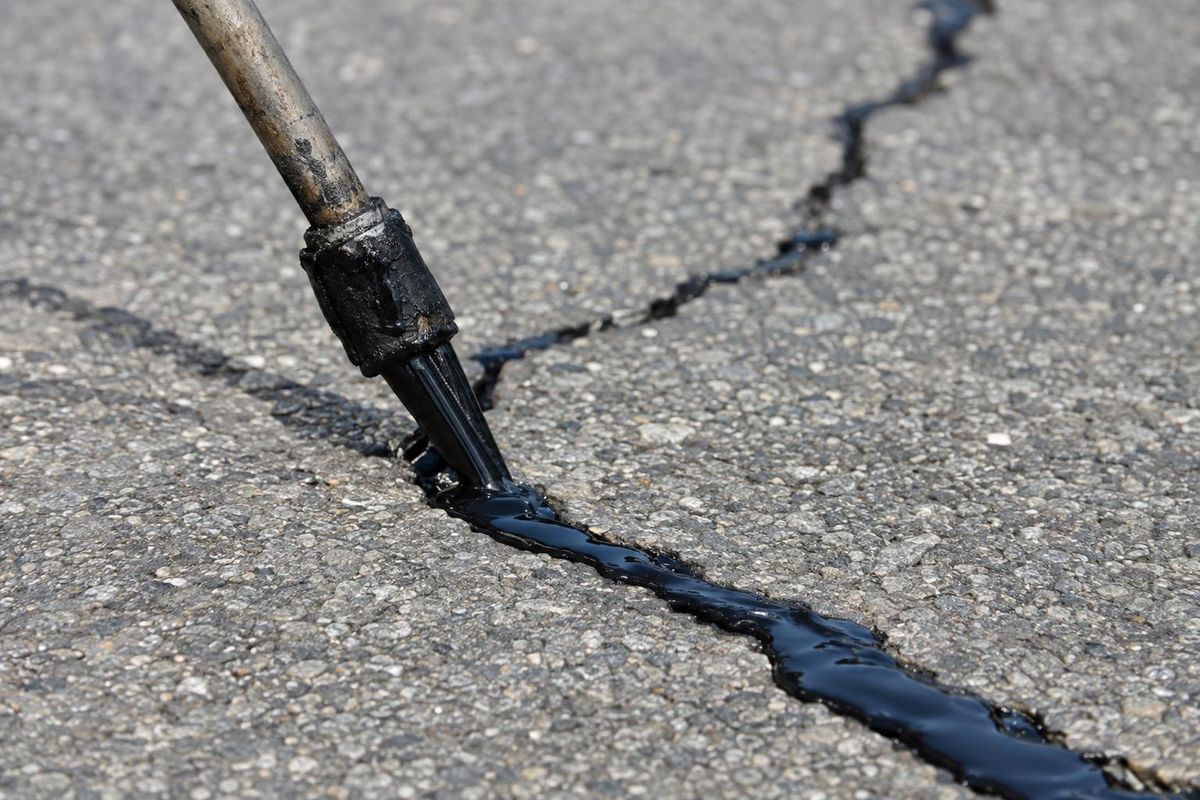
Thin cracks come from aging, sun exposure and normal movement. They are not an emergency, but they let water in. Sealing them while they are narrow keeps water out of the base and slows further damage.
Sealcoating protects against more of them forming.
Linear and joint cracks
Long straight cracks often follow the paving seams or sit above old cracks beneath an overlay. They can usually be cleaned and filled with rubberized crack sealant. If they widen over time, the base may be moving.
Check them each year, since they open and close with the seasons.
Alligator cracking
Interconnected cracks that look like alligator skin are a sign that the base cannot support the surface any longer. Water and traffic have worn the stone and soil under the asphalt.
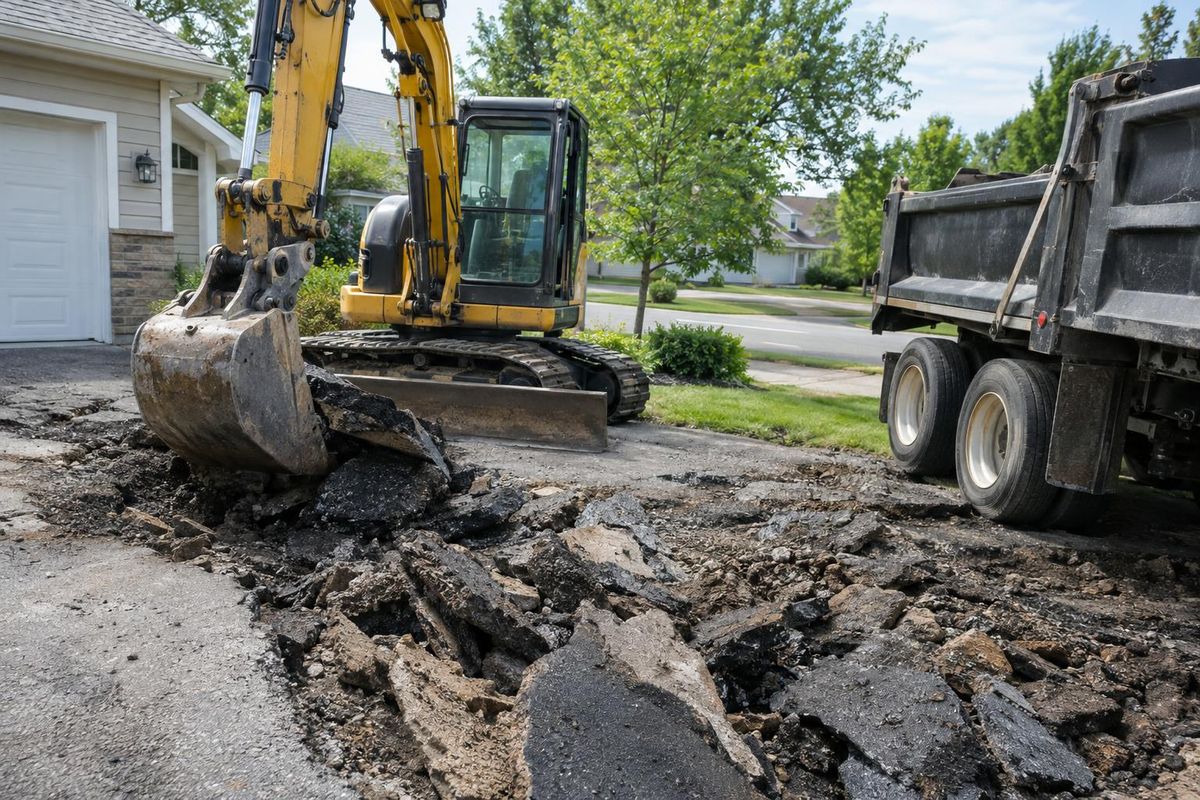
The fix is to remove the failed area and rebuild the base, not to seal or overlay it.
Edge and slippage cracks
Cracks along the edge usually come from poor support, water erosion or vehicles driving too close. Crescent-shaped cracks, known as slippage cracks, appear where the surface has slid, often from heavy braking or turning on a weak bond.
Both call for repairs that rebuild support or bonding, rather than simple sealing.
Quick answers
Should I seal all the cracks in my driveway?
Seal cracks of moderate width. Very wide or web-like cracks need patching or base repair.
Why do cracks come back after sealing?
Pavement moves with temperature and moisture, so sealed cracks can reopen. Periodic resealing is normal.
When are cracks a sign of a bigger problem?
When they form a web pattern, when the surface sinks or when water keeps ponding. Call us for an inspection.